
VA construction financing
VA One-Time Close Construction Loans
A VA one-time close construction loan lets you buy land and finance construction with the permanent mortgage in one closing before work begins. We offer this financing nationwide to eligible Veterans, active-duty service members, and surviving spouses. Complete the secure application first so we can pull the COE and review income, debts, assets, and credit. Some applications can be considered with a credit score as low as 580 after a full financial review. If the mortgage works, we review the builder, budget, plans, and finished-home appraisal.
Need more information?
Tell us what you are trying to accomplish.
We can answer the question, run the numbers, and explain the next step without starting with a credit check.
Want us to look at your VA loan options?
Tell us what you are working on and the best number to reach you. We will call, answer your question, and show you the next step. You do not need a credit check to ask.
What are you trying to do?
Thanks. We will call you back shortly.
Prefer not to wait? Call 888-435-7315.
What should I do before contacting a builder about VA construction?
Complete the online application before you commit to land, a builder deposit, plans, or a final budget. We pull the COE and review income, monthly debts, credit, assets, available funds, and the proposed payment first.
Once the borrower numbers work, we can review the land, builder, plans, and early budget. That keeps the detailed construction conversation focused on a project you can realistically finance.
What is a VA one-time close construction loan?
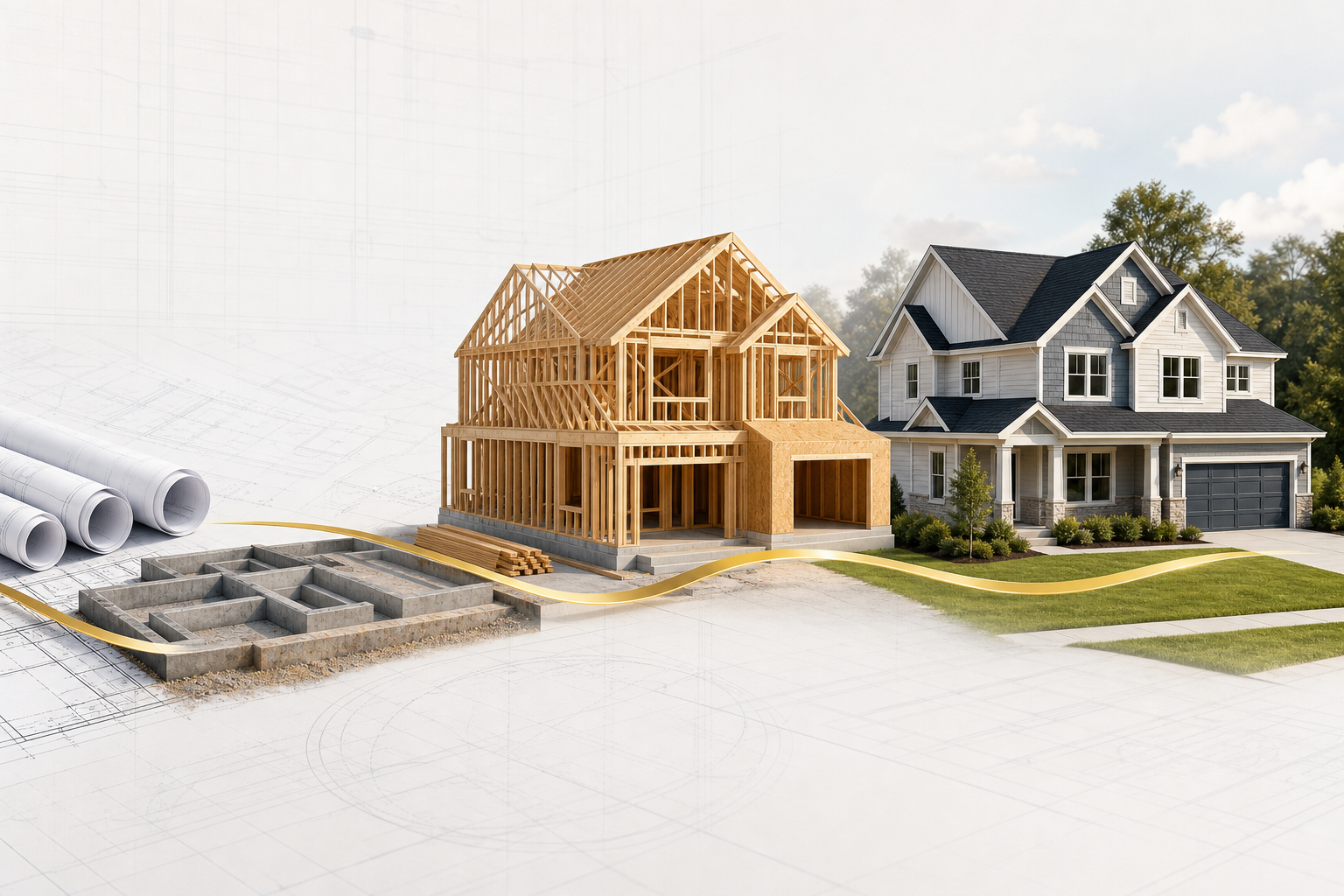
A VA one-time close construction loan is one mortgage that can pay for a lot approved for the planned home, the cost to build the home, and the permanent financing you keep after construction. You close before the work starts, the builder receives funds in approved draws as construction moves forward, and the loan changes to regular principal and interest payments after the home is complete.
The loan can cover up to 100% of the project cost when your VA entitlement supports the loan and the finished appraisal supports the budget. If the cost is higher than the finished value, or the budget includes something the loan cannot cover, we show you the difference before closing. The finished home must be your primary residence, and VA loans do not require monthly private mortgage insurance (PMI).
Use the calculator to estimate the lot purchase or current land payoff, builder’s bid, 5% contingency, construction interest reserve, VA funding fee, finished value, and possible cash needed before you request a full quote.
Can you buy land and build with the same VA loan?
A lot purchase can be included with the construction budget in the same one-time close loan when the land, builder, plans, contract, appraisal, title, and permits are approved together. If you already own the lot, we review the current land value, any balance still owed, the construction contract, and the finished appraisal to calculate how the equity affects the financing.
Owning the land does not automatically mean the loan will cover every cost. We compare the land value, construction budget, and finished appraisal so you know whether the land helps and whether any money will still be needed at closing.
Complete the online application first
A detailed construction review needs more than a quick phone conversation. The application lets us pull your COE and review your income, monthly debts, assets, credit, available funds, and expected payment before we ask you and the builder for the complete project package.
What does your builder need for a VA construction loan?
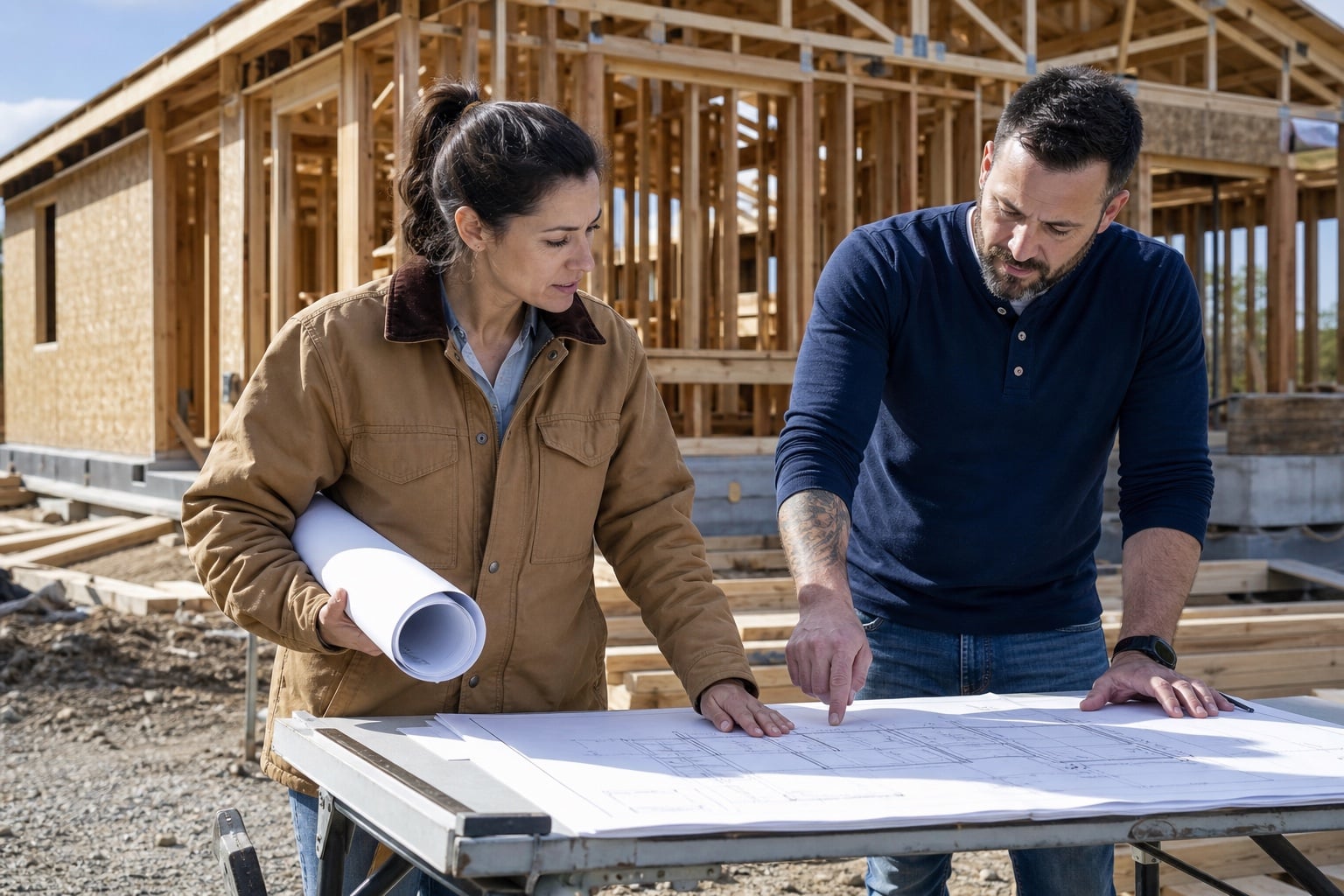
Your builder must be properly licensed where the home is being built. We also review the builder’s experience, insurance, contract, plans, budget, schedule, warranty, and draw process before the loan can close.
- State and local license when required
- Insurance that meets the construction program
- Detailed plans and material specifications
- Signed contract and complete cost breakdown
- Realistic construction and draw schedule
- Builder’s risk coverage effective at closing
- Required new construction warranty
- Local permit and inspection plan
VA removed the Builder ID requirement for regular VA-guaranteed new and proposed construction on March 31, 2025. Your builder does not need a VA Builder ID for this type of loan, but we still have to approve the builder and the project.
The former federal VA Builder ID is no longer required, although the builder and project still need lender approval. VA Circular 26-25-1 is the supporting source.
What can slow down a VA construction loan?
The delays we see usually start before construction, not during it. Incomplete plans, missing builder documents, missing insurance, pending permits, or a budget that does not match the appraisal can prevent us from approving the loan for closing.
Change orders can also cause trouble after the build starts, particularly if they increase cost or change the finished value without approval. We have streamlined our review around these items because fixing them early is usually much easier than changing the loan after the construction documents are signed.
- Incomplete plans or cost breakdown
- Builder approval or insurance not ready
- Appraisal below the full project cost
- Permits or local approvals still pending
- Unapproved change orders after closing
- Unusual property without good comparable sales

What costs are built into the construction budget?
The construction budget typically includes the builder’s contract, approved lot price or current land payoff, a 5% contingency, and a construction-period interest reserve. It can also include required insurance, permits, draw-management fees, the VA funding fee when applicable, and other approved costs. We identify every item that must be paid in cash before closing.
Any unused contingency reduces the principal balance when construction is complete under our current program. The interest reserve helps cover interest while the home is being built, which is why regular principal and interest payments generally begin after construction and the permanent loan modification are finished.
Ready for us to review your financing and construction budget together?
Apply online before the detailed project call. We start by pulling your COE and reviewing income, monthly debts, assets, credit, and available funds. Then we review the land, builder, budget, and expected finished value so we can explain what fits and what still needs work.
Why work with PBT Bancorp for your build?
During his 16-year mortgage career, Michael Parker has helped more than 3,000 families buy or refinance. Our team also has decades of experience working with Veterans. We explain what you need to qualify, what your builder must provide, and how the construction process works before anyone signs a contract.
PBT Bancorp is an FDIC member bank licensed in all 50 states with access to programs from more than 35 wholesale lenders. Credit scores as low as 580 may be considered, and we can review loan requests up to $4 million. We still have to approve both your mortgage and the proposed construction project.

- A dedicated VA specialist from the first review through closing
- Access to more than one construction-loan program
- 580 minimum credit score required
- Nationwide licensing for eligible builds in all 50 states
- Clear review of land, builder, budget, appraisal, and cash needed
VA construction loan questions
Why does PBT start with the online application?
The application lets us pull the COE and review income, monthly debts, credit, assets, available funds, and the proposed payment first. That gives you a realistic financing answer before you spend time or money on a builder package.
How much do I need to put down on a VA construction loan?
When the finished appraisal supports the full project cost and your available VA entitlement supports the loan, the project can be financed with no down payment. If the project costs more than the finished value or includes something the loan cannot cover, we show you how much would be due in cash.
Can I buy land and build with the same VA construction loan?
A lot purchase can be included with the construction budget in one loan when the land, builder, plans, contract, appraisal, title, and permits are approved together. We review the purchase and construction contract first, then use the plans, budget, and finished appraisal to set the amount financed.
Can I use land I already own?
Yes, land you already own can be part of the transaction, and its value may help when we compare the eligible acquisition cost against the completed appraisal. Any existing land balance and title requirements also have to be included in the review.
Does my builder need a VA Builder ID?
No, your builder does not need a VA Builder ID for this type of loan. VA Circular 26-25-1 removed that requirement for regular VA-guaranteed new and proposed construction, while state and local licensing rules and our builder and project review still apply.
Can I act as my own builder?
No, owner-builders are not allowed under our current VA one-time close program. The project needs an approved builder who can provide the required construction documents, insurance, warranty, budget, and draw schedule.
What credit score do I need for a VA construction loan?
The VA does not set one minimum credit score for every VA loan. Our current one-time close construction program may consider a score as low as 580. We also review your recent housing history, income, monthly debts, available funds, and the proposed build.
When do my mortgage payments begin?
Our current program includes an interest reserve in the construction budget, so regular principal and interest payments begin after construction and the permanent loan modification are complete. We show the interest reserve and expected payment start before you close.
Does the VA require a final inspection?
Yes, we require final completion documentation, which includes a final inspection or other approved evidence that the home was completed according to the plans and applicable requirements. A certificate of occupancy and any remaining survey or title items may also be required.
Can change orders be added after closing?
We must review and approve a change order before the builder completes the changed work because it can affect the approved budget, appraisal, contingency, timeline, and the money you need. An unapproved increase is not automatically added to the loan.
What happens to an unused 5% contingency?
Under our current program, any unused contingency is applied as a principal reduction after construction is complete. It is not paid back to you as cash.
Do I need a local VA construction lender?
Your builder must meet the local requirements where the home is being built. PBT Bancorp can handle the financing nationwide and coordinate with your builder, appraiser, title company, and local inspectors.
Does the VA funding fee apply to a construction loan?
The VA funding fee usually applies unless you qualify for an exemption. We confirm the fee before closing and show you whether it will be paid in cash or included in the loan amount.
What is the maximum PBT VA one-time close construction loan amount?
Our current program can review loan amounts up to $4 million. Your actual loan amount depends on your finances, VA entitlement, the construction budget, and the appraised value of the finished home.
Ready to start the VA construction application?
Complete the online application so we can pull your COE and review the mortgage, land, builder, budget, and estimated finished value before scheduling the complete project conversation.
Last reviewed August 6, 2026. The application-first construction review was added after the Builder ID guidance was verified against VA Circular 26-25-1. PBT Bancorp NMLS #257781.