
From the Georgia homesite and builder to the final construction draw
Use a VA One-Time Close Loan to Build in Georgia
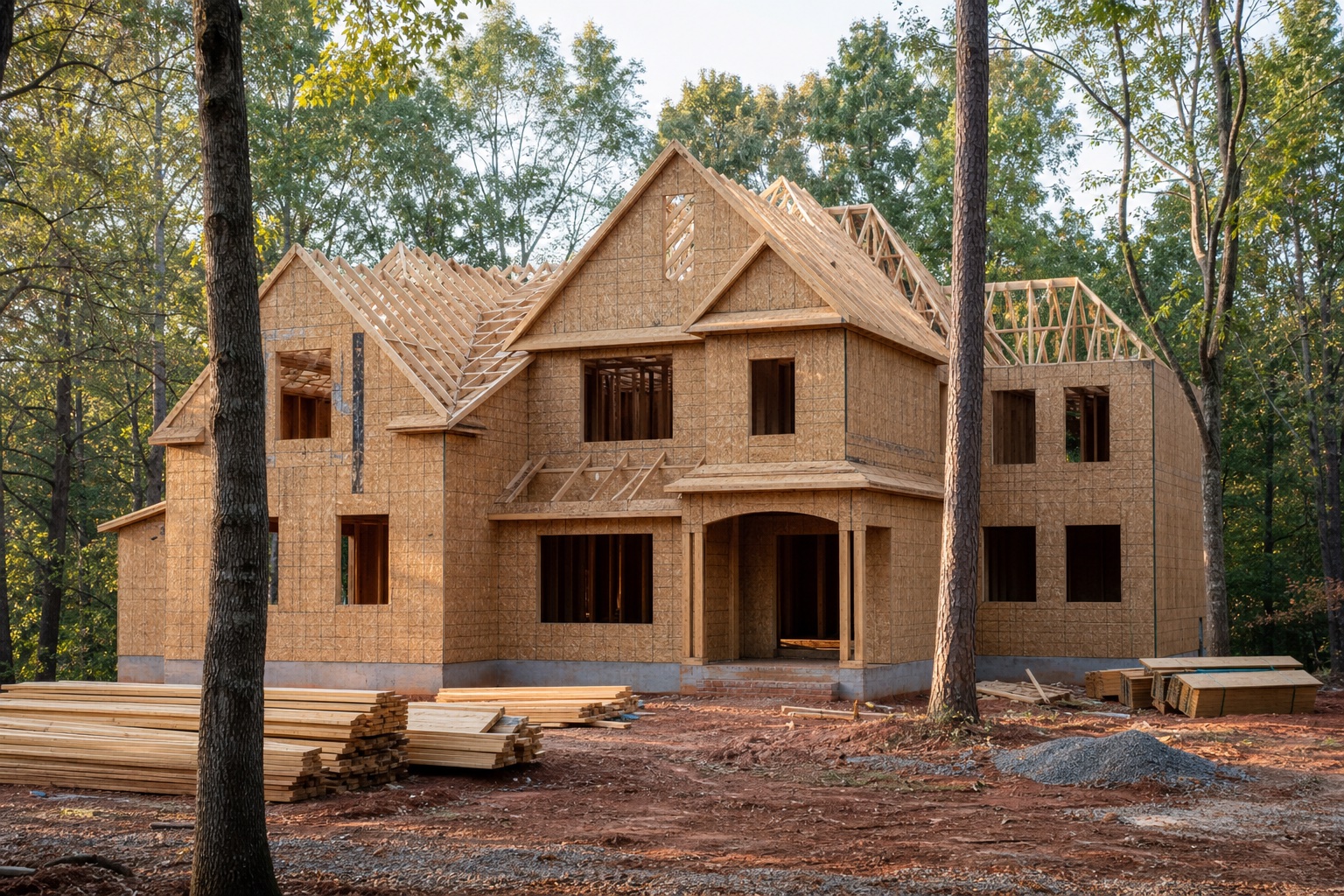
A Georgia VA one-time-close loan can place the lot, approved home construction, and permanent VA financing into one closing. You may already own the lot or purchase it with the build, but VA financing cannot buy vacant land alone for an unspecified future project.
The current Georgia one-time close program can consider a credit score as low as 580. The amount still depends on your income, monthly debts, entitlement, land and construction costs, and the finished-home appraisal. We also approve the site, builder, contract, plans, permits, title, and insurance before closing.
- Georgia construction and permanent financing together
- Current Georgia contractor and lien guidance
- Current Georgia construction loan terms
- PBT Bancorp NMLS #257781
Want us to look at your VA loan options?
Tell us what you are working on and the best number to reach you. We will call, answer your question, and show you the next step. You do not need a credit check to ask.
What are you trying to do?
Thanks. We will call you back shortly.
Prefer not to wait? Call 888-435-7315.
What do we review before you finalize plans for a Georgia homesite?
A usable lot is more than a parcel with enough square footage. Site limits can change the design, budget, appraisal, and construction schedule.
Access, utilities, and septic
We confirm legal access, electric service, the water source, sewer or septic feasibility, utility connection costs, and the agencies that must approve the work.
Grading, drainage, and soil
Georgia red clay, slope, erosion control, stormwater, driveway work, and foundation engineering can create site costs that a base house price does not include.
Zoning and building envelope
Setbacks, easements, flood area, subdivision restrictions, and local zoning must allow the proposed home, placement, driveway, and accessory features.
Start with the mortgage approval
Use the application to qualify the mortgage before assembling the Georgia build file
Georgia contractor, permit, lien, and draw documents matter only after we know the proposed mortgage works for you. We pull your COE and use the application to calculate a realistic loan amount and payment before reviewing the construction contract.
How can the Georgia lot enter the one-time-close loan?
The land and planned home are treated as one completed primary-residence project.
You already own the lot
For the property, we review the purchase, current title, any lien or payoff, and the land value supported by the appraisal. The land value PBT accepts can reduce the new loan or cash due, but it is not another project cost.
Lot closes with construction
The land purchase can be included when the approved contractor, plans, contract, budget, appraisal, title, insurance, and permits are ready for the same transaction.
Land-only request
A VA loan cannot finance vacant Georgia land by itself for a future project. The approved home and construction financing must be attached to the lot.
What do we verify about a Georgia contractor?
Although VA Circular 26-25-1 removed the VA Builder ID requirement, we still verify the contractor’s license and approval for the selected loan program.
- Active Georgia residential or general contractor license that covers the planned work
- Correct business name, insurance, experience, references, and financial capacity
- Fixed contract tied to the final plans, specifications, allowances, and completion date
- Detailed line-by-line construction budget and draw schedule
- Clear change-order, delay, dispute, warranty, and lien-waiver terms
- Our program requires an independent contractor whom we approve
- Written approval showing the contractor, fixed contract, budget, schedule, and project were accepted before closing
What changed in Georgia residential construction codes for 2026?
Georgia’s 2024 International Residential Code and related 2026 Georgia amendments became mandatory on January 1, 2026. The local permitting authority still applies the adopted code to the project.
Plans and specifications
The designer and contractor should identify the controlling code edition and amendments before final pricing, engineering, appraisal, and permit submission.
Local permit review
County or city officials determine the permit package, plan review, fees, trade permits, inspections, and certificate-of-occupancy process.
Energy and structural details
Foundation, framing, roof, insulation, mechanical, electrical, plumbing, and energy requirements need to match the documents used for price and appraisal.
Flood and insurance coordination
Flood zone, drainage, elevation, wind exposure, builder’s risk, and permanent property insurance should be resolved before closing rather than after a draw is delayed.
What does PBT include in a Georgia construction budget?
We build the budget from the lot through a complete, insurable home and explain when regular principal-and-interest payments begin.
House contract and site work
Start with the building price, clearing, grading, and foundation. Then add the driveway, utilities, septic, erosion control, landscaping, and other work unique to the site.
Professional and government charges
The project budget should include design, engineering, surveys, and any soil or septic work. Add permits, impact charges, title, inspections, required testing, and draw-management fees.
5% contingency
The 5% contingency covers unexpected construction costs. Any amount that is not needed for approved work reduces the loan balance instead of being paid out in cash.
Construction carrying costs
Budget the estimated interest-only amount, builder’s risk, required property coverage, funding fee or exemption, and every separately paid cash item.
See whether the complete plan can move forward
Want a real answer on the Georgia loan and construction plan?
Start with the application so we can review your finances before asking you and the contractor to assemble every project document. Once the financing and build fit together, we will explain the remaining conditions and the next step toward the one-time closing.
Which Georgia home types need extra appraisal review?
The property has to remain financeable as a completed primary residence, not merely buildable under a contract.
Traditional site-built house
Plans, specifications, code, permits, contractor, budget, and comparable sales must support the proposed residence.
Modular home
For a manufactured home, we review the home, transport, set work, permanent foundation, site contractor, state and local approvals, title, and comparable sales using the borrower and builder documents.
Manufactured home
We confirm new-unit eligibility and identify the dealer, installer, title, foundation, utilities, appraisal, and post-closing conditions.
Barndominium or uncommon design
Uncommon designs may be financed when the completed home meets our current construction requirements and the appraisal includes acceptable comparable sales.
Which Georgia loan and builder details must be complete before closing?
Before closing, we confirm your finances, VA entitlement, and plan to occupy the home. We then review the land, contractor, plans, fixed-price contract, budget, contingency, appraisal, permits, and title. Finally, we confirm the lien-waiver procedure, insurance, draw schedule, cash needed, and expected completion date.
We approve change orders before the work is completed because the loan amount cannot increase after closing. If the build runs past the approved schedule, we may need updated documents before construction can continue.
Use the source responsible for the loan, license, code, or lien rule
Where do we verify the current Georgia construction rules?
Federal sources cover VA eligibility, while Georgia sources cover contractor licensing, construction codes, and statutory lien-waiver forms.
VA program
VA home-buying guide
The official VA guide explains entitlement, occupancy, the appraisal, loan requirements, and the funding fee.
Open VA guidance
VA contractor rule
Builder ID circular
Read the federal change that removed the Builder ID requirement.
Read the circular
Georgia licensing
General contractor licensing FAQ
Confirm that the contractor’s Georgia license is active and its classification covers the planned work.
Check Georgia licensing
Georgia code
State minimum construction codes
Georgia’s code guide lists the current mandatory code editions and state amendments.
Open Georgia codes
Georgia liens
Interim-payment waiver statute
The Georgia lien guide explains the statutory waiver form and related payment provisions.
Read section 44-14-366
PBT construction
National VA one-time-close guide
See which costs can be financed, how draws work, and when regular payments begin.
Open the national guide
Builder requirements
VA builder review guide
The builder checklist organizes the licensing, contract, insurance, experience, schedule, and draw questions we review.
Open builder guidance
Project budget
VA construction budget worksheet
Organize land, site work, contract price, soft costs, contingency, insurance, and interest.
Open the worksheet
Georgia purchase
VA home loans in Georgia
Use the Georgia purchase guide when the property is already complete.
Open the state guide
Funding fee
VA funding fee chart
The VA funding-fee guide lists the current fee categories and exemption information.
Open the fee chart
Georgia VA construction loan questions
Can owned Georgia land be used in a VA construction loan?
Land you already own can be included after we document the title, current payoff, value, and planned home. Land equity is a financing credit and should not be counted again as a construction expense.
Can a VA loan purchase Georgia land without an immediate build?
No, VA financing cannot purchase vacant Georgia land by itself for a later project. The approved residence and construction financing must be part of the same transaction.
Which costs and value support a Georgia construction loan amount?
We calculate the Georgia construction loan from your qualifying income and debts, available VA entitlement, and the appraised value of the completed home. We then check that the budget includes the lot, site preparation, permits, utility work, and every approved part of the build.
Does the Georgia contractor need a VA Builder ID?
VA Circular 26-25-1 removed that requirement, but the contractor still needs the appropriate Georgia license. PBT still has to approve the Georgia contractor and the complete project before closing.
Why are Georgia interim lien waivers part of each draw?
We require the applicable Georgia interim lien waivers so each draw documents who was paid and which work the payment covers. We put the waiver beside the inspection, invoices, and requested draw.
Which Georgia residential code applies in 2026?
Beginning January 1, 2026, residential projects in Georgia became subject to the state’s adopted 2024 International Residential Code and related Georgia amendments. The local permitting authority applies the state code and any valid local requirements.
When do permanent loan payments begin?
Regular principal-and-interest payments begin after the home is completed. Estimated construction interest is carried in the approved project budget during the build.
Can a Georgia modular, manufactured, or barndominium home qualify?
Some Georgia modular, manufactured, and barndominium projects can qualify, but we need to review the exact home and building method first. Before you make a large deposit, we can check the permanent foundation, title, contractor, local code requirements, appraisal, and available comparable sales.
Start the Georgia construction application
Apply online so we can answer the financing question before you assemble every Georgia construction document. If the numbers work, the contractor and project review comes next.
Last reviewed August 6, 2026.